


Nicole Pratt is many things.
Former Olympian, 20-time Fed Cup competitor, former world No.35 and ongoing National Women’s Team Coach since 2015, Pratt possesses one impressive resume.
And adding to that already hefty list? Pratt is a huge advocate for women’s tennis and women coaches.
“Balance for me is a sense of equal representation, and what comes with that is diversity of thought and ideas,” Pratt told tennis.com.au.
“Like it or not, genders are different and we have different strengths. So, to not have equal representation in the room, I think is a missed opportunity.”
Following her successful playing career, in which she rose to the WTA’s top 40, Pratt turned to coaching.
In 2009, Pratt joined the Australian Institute of Sport and later became Head of Women’s Professional Tennis at Tennis Australia. She led the Australian Billie Jean King Cup team to world No.1 between 2021 and 2023, and coached Australian powerhouses Ash Barty, Casey Dellacqua prior to their retirement, before taking on her current players Kimberly Birrell and Storm Hunter.
“We've had an increase in the amount of women coaches [at Tennis Australia],” she said.
“I just read the other day [Tennis Australia] CEO Craig Tiley talking about [how] there's been a 60 per cent increase in women coaches in Australia … which is incredible. [I’m] very proud to be a part of the team that helped deliver that.
Pratt was a driving force behind the Coach Connect program, an initiative that connects women coaches to share experiences, build skills and support each other.
Read more: About Coach Connect
“In the early days of Coach Connect we did a reward and recognition of women coaches that had been coaching for decades, and they'd never had that visibility before or recognition.
“The fact that those women coaches have continued to coach, evolve into coach development and then support more women coaches … that for me is quite incredible.”
The Coach Connect program has been developing momentum since launching in May 2021, using mentoring, development sessions and meaningful connections to empower women in their coaching journey. It began as a driving force to kickstart an upswing in women coaches. But now, five years on, the pendulum has swung.
“Through creating programs [like] Coach Connect, there is a genuine community now of women coaches where it's sustainable,” Pratt said.
“It's not the program driving the women coaches [to connect]. They're driving each other. And coming together. And for me, that was what it was all about in the beginning.”
When asked what makes a great coach great, the answer was a handful of human – not gendered – traits.
“First and foremost, knowledge. You've got to have the knowledge. You've got to have the experience. You have to have the ability to create the environment to foster talent … You've got to genuinely care, be consistent in your behaviours as a coach, and … have the ability to adapt and be agile based on the situation that's presenting at any given point in time.”
Pratt has always been one to challenge gender stereotypes and break barriers, so in 2024 she made it her mission to coach a pro men’s tennis player. The former world No.35 worked with Australian Marc Polmans, coaching him through several Grand Slam tournaments with her trademark strategic approach and interpersonal style.
“I've been one of those coaches that's been pigeonholed into: ‘Hey, you're a successful female player and you'd be great with our female players’,” Pratt admitted. “However, I have this belief that coaching is genderless. And I'd love for it to be genderless.
“I am so grateful for the opportunity that [Polmans] gave me to work with him. And the insights that I gained from that experience was incredible.”
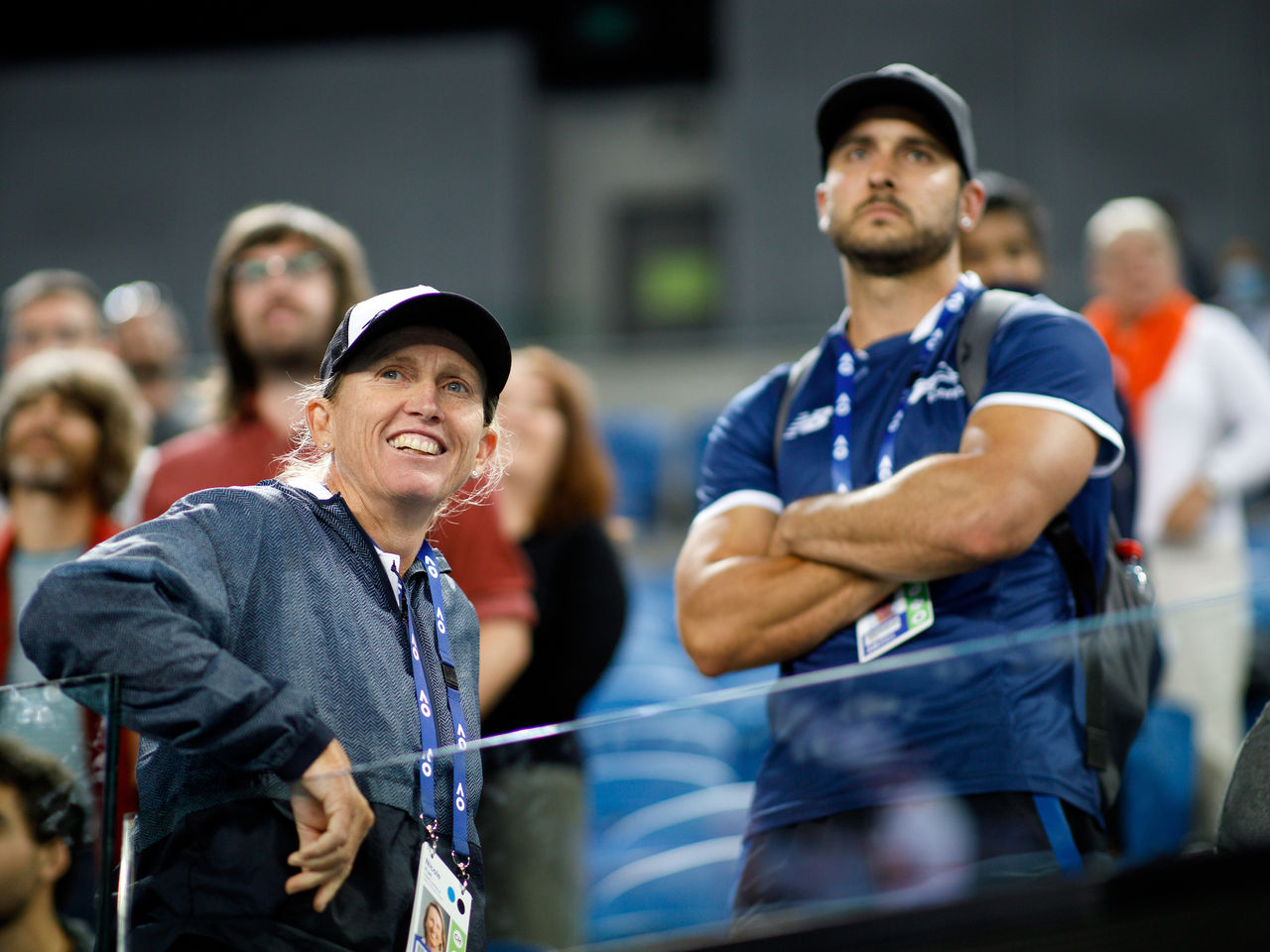
Pratt’s appreciation for ATP players who take on a woman coach is evident. She refers to Andy Murray, former world No.1 and three-time Grand Slam champion, who hired Amelie Mauresmo as his coach in 2014.
“How fantastic to see Andy Murray, who’s been an absolute champion for women in coaching [by] obviously employing Mauresmo, because that's exactly how he said it: She's played in Grand Slam finals, she knows what it feels like [to play], so I'm going to employ her. Which was, at that time, really forward thinking.”
If Pratt could have free reign to speed up the equal representation of women coaches in the ATP and WTA Tour, she would strike early in players’ careers.
“I would expose more younger males to having a female coach,” Pratt says thoughtfully.
“What typically happens is young males start working with female coaches … But then once the boy reaches certain milestones, [they think] oh, I need to move on to someone who's a better hitter or has played men's tennis … [but] staying with a female coach for longer, then maybe we would see a change later on.”
Pratt admitted that as a society, we still have work to do, but there’s evidence that the scales are starting to even out.
“It's changing that narrative. It's not easy. It's quite complex. Hence why we're not there yet. It’s a huge job on doing all of that,” Pratt said.
“What I'm proud about at the end of the day is, hopefully what I'm doing is providing an example [that] it is possible.
“It is possible.”